

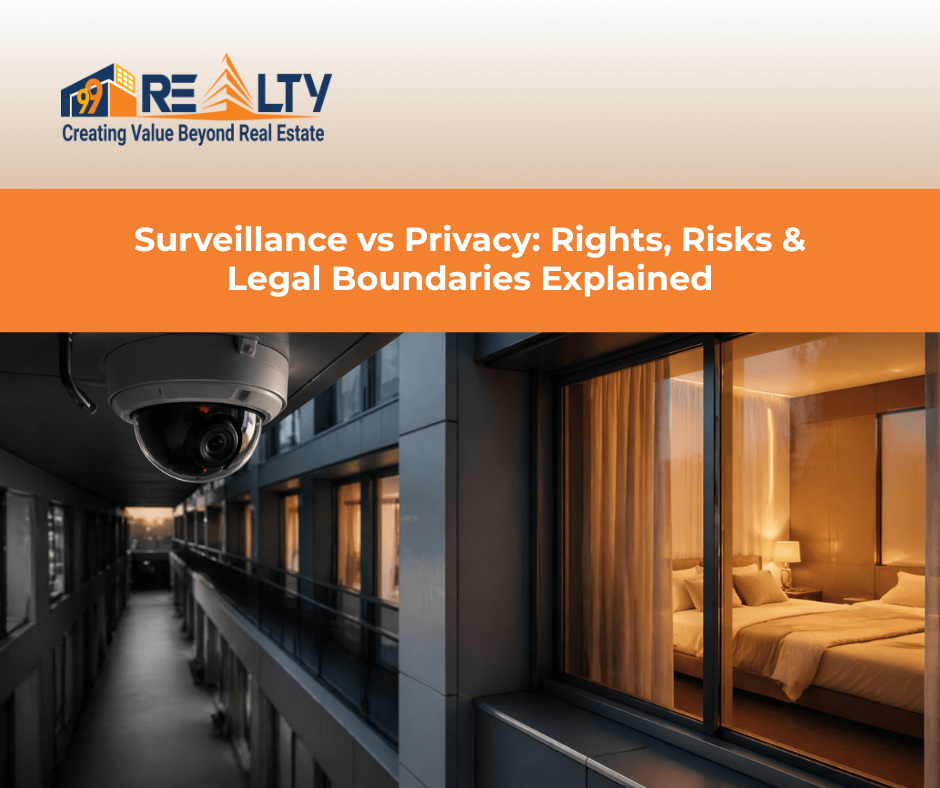
The security camera installed in your apartment building’s hallway captures footage 24/7. But do you know who’s watching? What they’re recording? And most importantly—is it legal?
Over the past two years, residential CCTV systems have become as common as WiFi routers in Indian apartment complexes. From Noida’s sprawling residential colonies to Ranchi’s emerging developments, apartment associations are rapidly installing surveillance networks. Yet, a critical gap exists: most homeowners and residents have no clear understanding of their rights, obligations, and the regulatory landscape governing these cameras.
Recent incidents in major cities have brought this issue into sharp focus. In 2024, multiple apartment complexes across Mumbai and Bangalore faced complaints when CCTV footage was misused for voyeurism. Simultaneously, residents have challenged “invasive” camera placements that violate privacy.
This blog breaks down everything you need to know about CCTV in apartments—from its legitimate uses to the legal minefields you should avoid.
Benefits of Living in a Gated Society vs Standalone Apartment Building
The Role and Uses of CCTV in Residential Apartments
CCTV systems serve legitimate security purposes in multi-unit residential buildings:
1. Common Area Monitoring Video surveillance in lobbies, parking lots, staircases, and entryways deters criminal activity and helps authorities track unauthorized individuals. This is the most defensible use of apartment CCTV.
2. Theft Prevention High-value property theft—bikes, scooters, packages—has risen in Indian metropolitan and suburban areas. CCTV acts as both a deterrent and evidence source for recovery and police action.
3. Unauthorized Access Control Cameras at entry points help distinguish residents from intruders and aid security personnel in monitoring suspicious movements.
4. Incident Investigation In cases of vandalism, theft, or violence, CCTV footage becomes crucial evidence for authorities.
5. Peace of Mind For families and elderly residents, visible security systems create a psychological sense of safety, which has tangible value.
However, the “role” of CCTV often extends beyond these legitimate uses—and that’s where problems begin.
Major Problems Residents Face
1. Invasion of Privacy
The most pressing complaint from apartment dwellers is camera placement that breaches reasonable expectations of privacy:
- Cameras focused on bathroom windows or balconies
- Hallway cameras capturing bedroom windows or apartment hall room
- Lobby cameras positioned to view changing areas
- Footage recorded in areas where residents have “implied privacy expectations”
New Property Buyers Top Checklist for Site Visit
Shuvendra Mullick v. Indranil Mullick (Calcutta High Court, February 2025)
CCTV cameras installed inside a shared residential space without consent of co-occupants violated the fundamental right to privacy. The court restrained the respondents from using and operating five cameras that were installed inside the residential portion of the dwelling house, pointing toward the resident’s bedroom.
2. Data Security and Misuse
Who has access to CCTV footage? A significant number of apartment buildings keep this information vague:
- Security guards downloading personal footage
- Footage shared without consent or legal authority
- No encryption or password protection on servers
- Footage retained indefinitely without clear purpose
Delhi High Court noted in 2023 that many apartment associations lack even basic data protection protocols. Non-compliance with India’s emerging digital privacy standards puts residents at risk.
3. Lack of Transparency
Most residents have no idea:
- Where cameras are positioned
- What footage is recorded and for how long
- Who can access the footage
- Whether footage is shared with third parties
- What happens to old footage
This opacity breeds distrust and legal vulnerability.
4. Consent Issues
Many apartment associations installed CCTV systems without explicit resident consent. Some didn’t disclose camera locations or purposes adequately.
Notable 2024 Development: The Delhi Apartment Association Guidelines now require mandatory signage and written consent before CCTV installation—a standard increasingly adopted in major cities.
5. Unauthorized Retention
Footage storage for 3-6 months is standard. Yet some buildings retain footage for years without clear justification—creating unnecessary liability and privacy risks.
Legal Angles Every Homeowner Must Understand
1. Constitutional Right to Privacy
Under Article 21 of the Indian Constitution (Right to Life), the Supreme Court has recognized privacy as a fundamental right. This applies to apartments.
What This Means: Excessive or invasive CCTV violates constitutional rights and can result in damages claims.
2. Information Technology (IT) Act, 2000
Section 43A addresses unauthorized access and misuse of personal data. If apartment management misuses CCTV footage for stalking, harassment, or voyeurism, it’s a criminal offense with penalties up to ₹2 lakh.
3. Indian Penal Code (IPC), 1860
- Section 292-294: Obscene material and voyeurism (non-consensual, secret observation or recording of individuals in private situations)
- Section 509: Word, gesture, or act intended to insult a woman’s modesty
- Section 424: Cheating by personation
CCTV misuse for voyeurism falls under these sections, attracting imprisonment up to 2-7 years.
4. Apartment Bye-Laws and RWA Regulations
Your apartment’s bye-laws must explicitly:
- Define camera locations
- Specify footage retention periods (typically 30-60 days)
- Outline access controls
- State how footage is used
- Provide resident dispute resolution mechanisms
Important: If your apartment has no CCTV policy documented in bye-laws, the system installation itself may be legally questionable.
5. Digital Personal Data Protection Act, 2023 (Now in Full Effect)
CCTV footage is now classified as “personal data” under the DPDP Act. This fundamentally changes how apartment buildings must handle surveillance:
Ethical Considerations for Homeowners
1. Proportionality Test
Is the level of surveillance proportional to the security threat? Installing 20 cameras in a 50-unit building suggests overreach rather than genuine security.
2. Dignity and Respect
Cameras should protect property, not monitor personal conduct in reasonable privacy zones.
3. Transparency is Trust
Apartments with clear, written CCTV policies experience fewer resident conflicts and build stronger community trust.
4. Data Responsibility
Whoever holds footage data has an ethical responsibility to protect it from misuse, regardless of legal mandates.
Contractual Angles: Practical Safeguards
1. CCTV Clause in Apartment Bye-Laws
Your apartment agreement should explicitly state:
“CCTV cameras shall be installed only in common areas (lobby, parking, staircases). Footage shall be retained for 30 days. Access is restricted to authorized security personnel, resident on written application to society secretary and legal authorities. Footage shall not be shared with any third party without residents consent or court order.”
2. Resident Consent Mechanism
A democratic process (majority vote) should approve:
- Camera installation
- Locations
- Budget allocation
- Retention policies
3. Access Log
Apartments should maintain a documented log of who accessed footage, when, and for what purpose.
4. Grievance Redressal
The bye-laws must define a process for residents to lodge privacy concerns and seek remedies.
5. Annual Audit
Cameras and systems should be audited annually to ensure compliance with approved locations and specifications.
Actionable Steps for Residents and Homeowners
If You’re a Homeowner:
- Review Your Bye-Laws: Check if CCTV policies are documented and compliant with current legal standards
- Audit Camera Placement: Verify cameras don’t capture private spaces of your premises
- Implement Access Controls: Limit footage access to authorized personnel only
- Establish Retention Limits: Don’t retain footage beyond 30-45 days without cause
- Create Transparency: Display camera locations with clear signage
If You’re a Resident:
- Know Your Rights: Request the CCTV policy from your RWA in writing
- Raise Concerns: If camera placement seems invasive, lodge a formal complaint
- Demand Transparency: Ask who has access to footage and for how long
- Document Issues: If footage is misused, preserve evidence and file complaints with police/RWA
- Seek Legal Counsel: For serious violations, consult a property lawyer
Conclusion: Security and Privacy Can Coexist
CCTV in apartments isn’t inherently bad. It serves legitimate security purposes. But legitimacy requires transparency, restraint, and respect for residents’ constitutional right to privacy.
As apartment complexes across Dhanbad, Ranchi, Noida, Lucknow, and Jamshedpur expand, this issue will only become more relevant. Homeowners and residents who understand these legal, ethical, and contractual aspects protect themselves, build trust within their communities, and avoid costly legal battles.
The question isn’t whether apartments need CCTV—it’s whether apartments will implement it responsibly.
DISCLAIMER
This blog post is for informational and educational purposes only. The content provided here is not legal, financial, or professional advice. While we have made reasonable efforts to ensure the accuracy of information presented, laws, regulations, and court rulings are subject to change and may vary based on jurisdiction, specific circumstances, and recent legal developments.
Need Help?
Need help evaluating a property or planning your next move in the market?
Reach out to 99 REALTY – your trusted real estate partner for smarter choices.
Subscribe to get updates on our latest posts and market trends.



Join The Discussion