

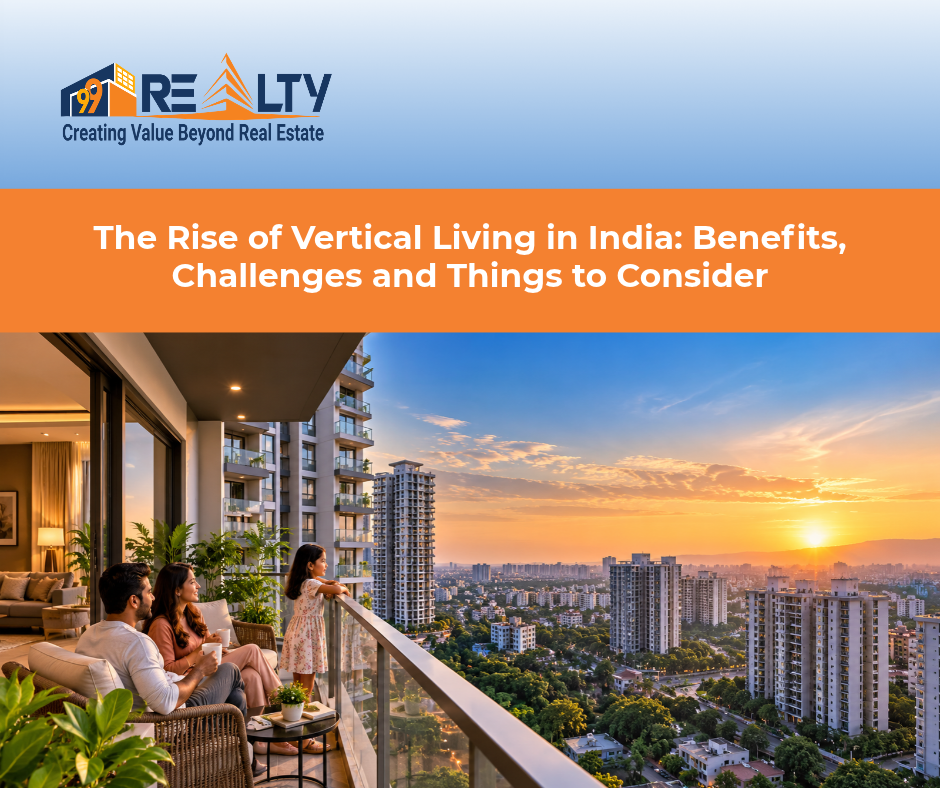
There was a time when owning a home in India meant having a house with a courtyard, a terrace where the family could gather in the evening, and enough space for everyday life to unfold at its own pace. Today, the picture of urban home ownership is changing. From the growing skylines of Ranchi and Jamshedpur to the rapidly developing residential corridors of Delhi-NCR, Kolkata and Pune, high-rise buildings are becoming an increasingly familiar part of the Indian real estate landscape.
But this shift is about more than taller buildings and better views. It reflects how Indian families are rethinking convenience, security, community living and the value of their investment.
Imagine starting your morning with sunlight entering your apartment, looking out at the city from your balcony, and having a gym, landscaped gardens or a children’s play area just a lift ride away. For many homebuyers, this is the appeal of modern apartment living.
However, like every property choice, high-rise living comes with its own set of considerations. So, is an apartment on the 15th floor a better choice than an independent house? The answer depends on your lifestyle, budget, family requirements and the location you choose.
Let’s take a closer look.
Flooded Parking Basements Are India’s New Housing Nightmare
Why High-Rise Buildings Are Becoming Popular in India
India’s cities are growing, and with that growth comes increasing demand for well-planned residential spaces. As land becomes more expensive in established urban locations, developers are looking upwards to create homes that accommodate more families within a limited land area.
For buyers, this can mean access to planned residential communities, shared amenities and locations closer to employment hubs, educational institutions, healthcare facilities and shopping destinations.
The appeal is particularly strong among working professionals, young couples and families who want a home that fits their present needs while offering room for their future plans.
The Pros of Living in a High-Rise Building
1. Better Views, More Natural Light and a Sense of Space
One of the most noticeable advantages of high-rise living is the experience of being above the everyday rush of the city.
Depending on the building’s orientation, surrounding development and floor level, an apartment may offer wider views, better daylight and improved privacy compared with a home surrounded by closely packed buildings.
A well-designed balcony can become a favourite corner for morning tea, reading or simply taking a break after a busy day. For people working from home, natural light and an open outlook can also make the living environment feel more pleasant.
Of course, not every higher floor guarantees better ventilation or sunlight. The apartment’s layout, window placement and nearby buildings matter just as much.
2. Modern Amenities That Make Everyday Life Easier
A major attraction of contemporary residential projects is the availability of amenities within the complex.
Depending on the project, residents may have access to landscaped gardens, fitness centres, community halls, children’s play areas, walking paths and dedicated recreational spaces.
For a family with children, having a play area within the residential premises can make everyday outdoor activities more convenient. For working professionals, an in-house gym or walking track can help reduce the need to travel elsewhere for exercise.
These amenities can also create opportunities for neighbours to interact, helping residents build friendships and a sense of community.
The important thing is to look beyond the brochure. Check which facilities are actually included, whether they are operational and how their maintenance costs are managed.
3. Security and a More Organised Residential Environment
Safety is an important consideration when choosing a home, especially for families with children and older parents.
Many gated high-rise communities offer features such as controlled entry points, security personnel, CCTV surveillance in common areas and visitor-management systems. Some developments also provide intercom facilities and designated parking.
Such arrangements can make day-to-day living more organised and provide residents with greater peace of mind.
However, security depends on how effectively these systems are operated, not simply on the number of features advertised. Buyers should understand the actual security arrangements, emergency procedures and access controls before making a decision.
4. Less Individual Upkeep Compared with an Independent House
Owning an independent house often means taking responsibility for a wide range of tasks, from maintaining the exterior and terrace to managing common drainage, boundary walls and outdoor spaces.
In a high-rise society, many shared responsibilities are handled through the apartment association or appointed facility-management team.
This can be particularly helpful for busy professionals and families who prefer a more managed residential environment.
That does not mean apartment ownership is maintenance-free. Residents still need to pay applicable maintenance charges and may face additional costs for repairs or major building works. The difference is that many responsibilities are coordinated collectively rather than handled entirely by each homeowner.
5. A Lifestyle That Can Suit Different Stages of Life
High-rise apartments can work well for different household needs, provided the project is chosen carefully.
Young couples may value convenient access to work and social spaces. Families may prioritise larger configurations, children’s facilities and nearby schools. Older residents may appreciate lifts, security arrangements and access to essential services.
The real advantage lies in finding a home that supports your routine rather than choosing an apartment solely because it looks impressive.
For families planning to stay for several years, factors such as the number of bedrooms, lift reliability, accessibility, parking and the availability of healthcare facilities nearby deserve as much attention as the apartment’s interiors.
The Cons of High-Rise Living: What Should Buyers Consider?
While high-rise buildings offer several benefits, making an informed decision also means understanding the practical challenges.
1. Maintenance Charges and Recurring Expenses
Shared amenities, lifts, security staff, generators, common lighting and building-management systems all require regular upkeep.
As a result, monthly maintenance charges can form a meaningful part of the household budget, particularly in projects with extensive facilities.
Before buying, ask for the estimated monthly maintenance cost, the basis on which it is calculated and whether separate charges apply for parking, clubhouse access or other services.
A home should fit comfortably within your long-term budget, not just your initial purchase budget.
2. Dependence on Lifts and Building Infrastructure
In a multi-storey building, lifts are an essential part of everyday life. A lift breakdown, power interruption or maintenance shutdown can be inconvenient, especially for residents on higher floors.
This makes lift capacity, maintenance arrangements, backup power and emergency access important factors to investigate.
Families with elderly members, people with mobility difficulties and parents with young children should pay particular attention to these details.
It is also worth asking about fire-safety systems, evacuation routes, emergency lighting and the availability of accessible exits.
3. Less Private Outdoor Space
An apartment balcony can provide fresh air and an outdoor corner, but it is not the same as having a private garden or an independent terrace.
Residents may also need to follow society rules regarding pets, renovations, noise, visitor access and the use of common areas.
For buyers who enjoy gardening, hosting large gatherings or having complete freedom over their property, an independent house may be a better fit.
The key is to understand your priorities before deciding which type of home suits you.
4. The Quality of Management Matters
Even a beautifully designed residential complex needs proper management to remain comfortable over time.
Poorly maintained common areas, delayed repairs, unclear maintenance accounts or disagreements within the residents’ association can affect the living experience.
Before purchasing, examine the condition of completed projects by the same developer, where possible. Speak to existing residents and ask about maintenance quality, water supply, parking arrangements and how complaints are resolved.
A well-managed building can make a significant difference to the long-term experience of apartment ownership.
High-Rise Apartment vs Independent House: Which One Should You Choose?
The right choice depends on what you value most in your everyday life.
| Factor | High-Rise Apartment | Independent House |
|---|---|---|
| Security | Often includes shared security systems | Depends largely on individual arrangements |
| Amenities | May offer shared recreational facilities | Usually requires separate arrangements |
| Maintenance | Shared and professionally coordinated in many projects | Primarily managed by the homeowner |
| Privacy | Depends on layout, neighbours and society rules | Generally offers more control over the property |
| Outdoor space | Usually a balcony and shared open areas | May include a private garden or terrace |
| Lifestyle | Suits buyers seeking managed community living | Suits buyers seeking greater independence |
Neither option is universally better. A well-located apartment can be more suitable for one family, while an independent house may be ideal for another.
The decision should come down to affordability, location, family needs and the lifestyle you want to build around your home.
What Should You Check Before Buying a High-Rise Apartment in India?
Before finalising a property, look beyond the sample flat and the amenities list. A practical checklist can help you make a more confident decision.
- Verify legal and regulatory details: Check the applicable RERA registration, sanctioned plans, title documents and occupancy or completion documentation, as relevant to the project and stage of purchase.
- Evaluate the location: Consider commute times, road connectivity, schools, hospitals, markets and public transport.
- Understand the total cost: Include registration, applicable taxes, parking charges, maintenance deposits and recurring expenses in your calculations.
- Inspect construction and facilities: Review water supply, drainage, ventilation, lift arrangements, backup power and the condition of common areas.
- Check safety provisions: Understand fire-safety compliance, evacuation arrangements and emergency access.
- Think long term: Consider whether the apartment will meet your family’s needs over the next five to ten years.
The Final Word: Is High-Rise Living Worth It?
High-rise living in India represents a changing approach to home ownership. It combines private residential space with shared facilities, managed infrastructure and the opportunity to live in established or developing urban neighbourhoods.
For many homebuyers, the biggest advantage is convenience: a home where everyday needs, recreation and community living can come together within a thoughtfully planned environment.
There are considerations, of course. Maintenance expenses, dependence on lifts, the quality of management and limited private outdoor space deserve careful attention. But with the right research and a clear understanding of your family’s needs, these factors can be evaluated before making a commitment.
At the end of the day, the best home is not necessarily the tallest building or the apartment with the longest list of amenities. It is the home that offers the right balance of comfort, location, affordability and long-term suitability.
Because owning a home is not just about the address on your documents. It is about the life you build inside it.
Need Help?
Need help evaluating a property or planning your next move in the market?
Reach out to 99 REALTY – your trusted real estate partner for smarter choices.
Subscribe to get updates on our latest posts and market trends.


Join The Discussion