

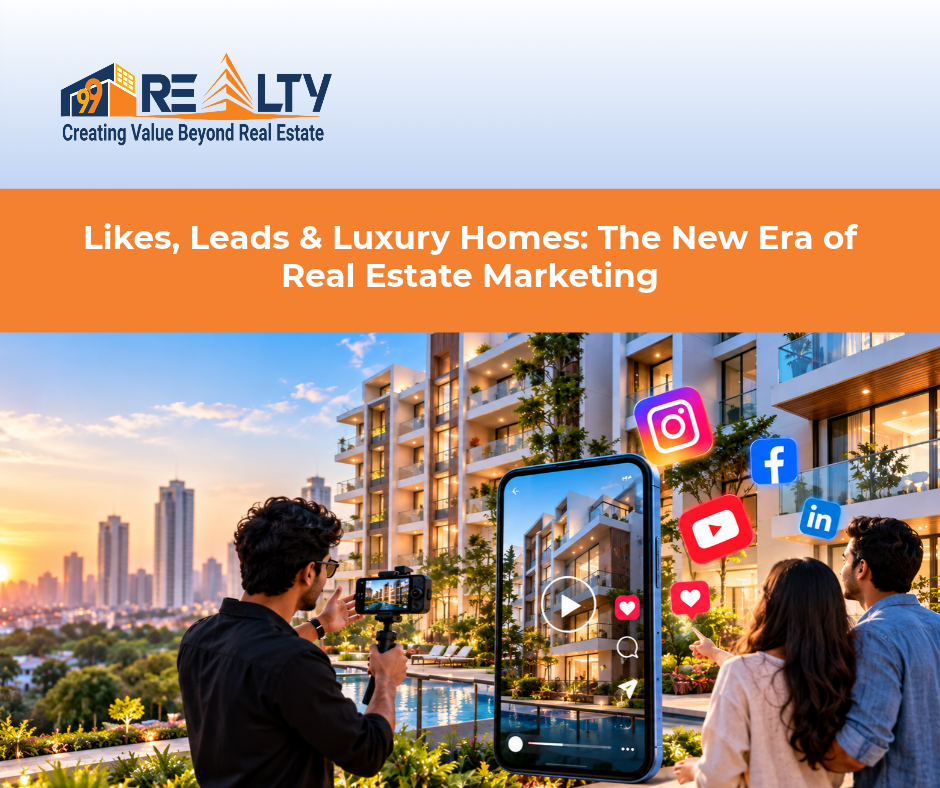
The journey to buying a home has changed dramatically. A few years ago, prospective buyers primarily depended on newspaper advertisements, property portals, hoardings, brokers, and personal recommendations to discover properties. Today, that journey often begins with a social media post, a short video, a property walkthrough, or an influencer sharing their experience of a residential project.
For real estate developers, this shift represents more than a change in advertising. It signals a new way of connecting with customers.
Homebuyers want more than a list of amenities and a price quotation. They want to understand the lifestyle a property offers, the neighbourhood they might live in, the convenience of its location, and the credibility of the developer behind it. Digital platforms allow developers to communicate these details through engaging, visual, and interactive content.
At the centre of this transformation are two powerful forces: social media and influencer marketing. Together, they are helping developers move beyond traditional promotion, engage more relevant audiences, and create stronger connections with potential buyers.
Game-Changing Real Estate Judgment: Sellers Cannot Cancel Registered Sale Deed Over Unpaid Dues
Influencers: Bringing Properties Closer to People
Real estate is a high-value purchase, and trust plays an important role in the decision-making process. Buyers may spend months comparing locations, researching developers, evaluating amenities, and discussing options with their families before making a final decision.
Influencers can help simplify this journey by presenting properties in a relatable and accessible format.
Unlike conventional advertisements, which often focus on promotional messaging, influencers can showcase a project through property tours, lifestyle videos, neighbourhood explorations, interviews, and informative reviews. Their content helps audiences visualise what living in a particular property could actually look like.
For example, a lifestyle creator visiting a premium apartment can demonstrate its interiors, natural lighting, amenities, and recreational spaces. A local content creator can explore the surrounding market, schools, hospitals, restaurants, and transport connectivity. A real estate-focused influencer can explain the project’s layout, location advantages, and key features in a more detailed format.
These experiences make property information easier to understand and more engaging to consume.
The real value of influencer marketing lies in translating property features into relatable experiences. Instead of simply telling audiences that a project offers a desirable lifestyle, creators can help them see what that lifestyle might look like.
However, effective influencer marketing depends on authentic communication. Property claims, pricing, amenities, possession timelines, and project details must be accurate and verified. Credibility matters far more than exaggerated promotional promises.
The Right Influencer Matters More Than the Biggest Following
A large follower count does not automatically translate into property enquiries or sales. Real estate developers need to identify creators whose audiences align with their project’s location, price range, and target customer profile.
Consider three different scenarios.
A luxury residential project may benefit from working with lifestyle creators whose followers are interested in premium living, architecture, and upscale amenities. An affordable housing development may find greater relevance among local creators who connect with first-time homebuyers and working professionals. A plotted development in an emerging city may benefit from regional influencers who understand local preferences and have built strong community relationships.
In each case, the objective is not simply to generate views. It is to reach people who may genuinely consider purchasing the property.
Regional influencers can be particularly valuable in markets where buyers prefer information in their native language and place considerable importance on local knowledge. A creator who understands the culture, infrastructure, neighbourhoods, and aspirations of a city can communicate a project’s advantages in ways that feel more relevant to local audiences.
Developers can also combine different creator categories to serve different purposes: awareness-focused creators introduce a project to new audiences, niche experts explain its features, and local influencers help establish geographical relevance.
This targeted approach makes influencer marketing a more strategic part of the overall sales process.
Social Media: Turning Visibility into Property Enquiries
If influencers help build familiarity and trust, social media provides the infrastructure to distribute content, engage audiences, and generate enquiries.
Platforms such as Instagram, Facebook, YouTube, and LinkedIn offer different opportunities for real estate marketing. Their value lies in using each platform according to its strengths rather than publishing the same content everywhere.
Instagram is well suited to visually compelling property reels, interior showcases, lifestyle videos, and short project tours. Facebook can support local community outreach, lead-generation campaigns, and targeted advertising. YouTube allows developers to publish longer walkthroughs, project explainers, customer testimonials, and location guides. LinkedIn can strengthen corporate credibility, support professional networking, and communicate a developer’s achievements to business audiences.
Together, these platforms create multiple opportunities for prospective buyers to discover and evaluate a project.
A person might first encounter a property through a reel, watch a detailed walkthrough on YouTube, visit the developer’s website, and later enquire after seeing a relevant advertisement. Each interaction can contribute to the buyer’s understanding and confidence.
This is particularly important because property purchases rarely happen after a single exposure to an advertisement. Buyers often need repeated opportunities to review information, compare alternatives, and discuss their choices.
Consistent social media communication helps developers remain visible throughout this decision-making process.
The Power of Video: Showing More Than a Floor Plan
Real estate is inherently visual. Buyers want to understand space, design, movement, light, amenities, and the surrounding environment. Video content can communicate these qualities more effectively than a static promotional image alone.
Short-form videos have become useful tools for introducing projects and attracting attention. A well-produced reel can highlight a property’s most appealing features within seconds, encouraging viewers to explore further.
Long-form videos serve a different purpose. They allow developers to explain layouts, demonstrate amenities, discuss construction progress where appropriate, and provide a more comprehensive view of the project.
Useful formats include:
- Property walkthroughs: Showing room layouts, interiors, balconies, common areas, and amenities.
- Location tours: Highlighting nearby transport links, educational institutions, healthcare facilities, and commercial centres, with distances and claims verified.
- Educational videos: Explaining home-loan basics, RERA registration, property documentation, and important questions buyers should ask.
- Behind-the-scenes content: Introducing the people, planning, and processes involved in developing a project.
- Live sessions and Q&As: Giving prospective buyers an opportunity to ask questions and receive direct responses.
- Customer stories: Sharing genuine experiences from buyers, with their consent and without presenting individual outcomes as universal guarantees.
The strongest content strategy balances promotional material with useful information. Buyers are more likely to engage with a brand that helps them make informed decisions than one that repeatedly publishes sales messages.
From Views to Site Visits: The Role of Active Marketing
Visibility is only the beginning. For developers, the real objective is to convert attention into meaningful enquiries, qualified leads, site visits, and ultimately sales.
This is where active digital marketing becomes essential.
Rather than relying exclusively on organic reach, developers can combine content with targeted advertising, audience segmentation, retargeting, lead forms, website optimisation, and timely follow-ups.
For instance, a developer promoting a residential project can run a campaign targeting relevant locations and customer segments. People who watch project videos or visit the website may subsequently receive additional information about the property, provided the campaigns comply with applicable advertising and privacy requirements.
Lead-generation campaigns can help interested users request brochures, pricing details, or site visits. Those enquiries can then be handled by the sales team through calls, messaging, or scheduled appointments.
The process becomes more effective when marketing and sales teams work together. Marketing teams can identify which campaigns generate enquiries, while sales teams can provide feedback about lead quality, buyer objections, and common questions.
This feedback helps refine future campaigns.
For example, if audiences engage strongly with location-focused videos but enquire mainly about connectivity, developers can create more detailed content addressing transport access and nearby infrastructure. If a campaign generates many enquiries but few site visits, the team can investigate whether the targeting, pricing communication, or follow-up process needs improvement.
The aim is to build a measurable journey from discovery to purchase rather than treating every social media interaction as an isolated result.
Data-Driven Marketing: Reaching the Right Audience at the Right Time
One of the biggest advantages of digital marketing is the ability to measure performance and make informed decisions.
Traditional advertising can offer broad visibility, but measuring its direct contribution to individual property enquiries can be challenging. Digital platforms provide metrics such as reach, impressions, video views, click-through rates, enquiries, cost per lead, and website activity.
These indicators help developers understand which messages resonate with audiences and which channels generate stronger commercial results.
However, high engagement does not necessarily mean high purchase intent. A humorous property reel might attract thousands of views without generating qualified enquiries, while a detailed video explaining apartment layouts may reach fewer people but produce more serious buyers.
Developers should therefore evaluate campaigns against clear objectives. Awareness campaigns can be measured through reach and video engagement, while lead-generation campaigns should be assessed through enquiry quality, site visits, conversion rates, and cost per qualified lead.
Influencer campaigns also require appropriate measurement. Tracking links, dedicated enquiry forms, campaign-specific phone numbers, and clear lead-source records can help identify the contribution of individual creators.
This data-driven approach allows developers to improve their marketing investments over time and focus on activities that contribute to actual business outcomes.
Building Trust in a Digital-First Property Market
Despite the opportunities offered by social media and influencer marketing, real estate promotion comes with an important responsibility. A property purchase involves significant financial commitments, and misleading claims can damage both buyer confidence and a developer’s reputation.
Developers and their marketing partners should communicate project information accurately, verify claims about amenities and connectivity, and disclose paid influencer partnerships transparently. Applicable RERA requirements, advertising standards, and platform policies must be followed.
Influencers should have access to verified project information and avoid making unsupported promises about appreciation, rental returns, guaranteed profits, or future infrastructure.
Social media also creates opportunities for two-way communication. Comments, direct messages, live sessions, and online reviews allow buyers to ask questions and express concerns. Responding promptly and professionally can help developers demonstrate accountability.
In an industry where credibility can influence a customer’s final decision, transparency is not simply a compliance requirement. It is an important part of building long-term brand value.
The Future: A More Connected Real Estate Experience
The next phase of real estate marketing is likely to bring together influencer partnerships, short-form video, personalised advertising, virtual property tours, conversational communication, and increasingly sophisticated data analytics.
Artificial intelligence and marketing automation can also help teams organise enquiries, personalise communication, and improve campaign efficiency. These tools can support the buyer journey, although human interaction remains important when customers need advice about a complex and high-value purchase.
Developers that integrate these capabilities into a coherent strategy can create a more connected experience—from the first social media impression to the final site visit and beyond.
The opportunity is not merely to sell a property faster. It is to make property discovery more accessible, communication more relevant, and the buying journey more informative.
Conclusion: The Future of Property Sales Is Built on Connection
Influencer marketing and social media are reshaping how real estate developers communicate with potential buyers. Influencers bring properties to life through relatable experiences, while social media platforms help distribute content, engage audiences, and create opportunities for targeted promotion.
When supported by accurate information, active marketing, data analysis, and a responsive sales process, these tools can help developers reach more relevant audiences and generate better-quality enquiries.
Success, however, depends on more than viral videos or impressive follower counts. It requires understanding buyer needs, choosing the right platforms, delivering useful content, and building trust at every stage of the customer journey.
At 99Realty, we believe that effective real estate marketing is about making the right property visible to the right audience. In a competitive digital landscape, the combination of engaging content, strategic social media marketing, and meaningful customer connections can help bridge the gap between discovering a property and finding a place to call home.
Need Help?
Need help evaluating a property or planning your next move in the market?
Reach out to 99 REALTY – your trusted real estate partner for smarter choices.
Subscribe to get updates on our latest posts and market trends.



Join The Discussion