


If you live in India you’ve probably seen headlines about sudden demolitions: homes flattened, shops razed, entire buildings lost overnight. Many of these residents claim, “We had all the documents!” while the authorities insist the construction was illegal.
So what’s really going on behind the dust and debris?
Let’s break down the truth—clearly, honestly and practically.
What Counts as “Illegal”?
Illegal construction essentially means a structure that violates existing building laws, zoning regulations, or approval requirements. But illegal isn’t always obvious—it can hide behind glossy brochures and confident real estate brokers too.
The most common violation:
- The builder never got the required approvals from the municipality or authority.
- The building plan was never officially sanctioned
- They built extra floors or extensions that were not allowed
- The project wasn’t listed with RERA
- No permission was taken regarding environmental impact
- The structure was built on someone else’s land without their consent or proper paper work
- The property was built on government land or an area where construction is legally prohibited like green zone, tribal land or communal land.
Many buildings look legitimate but are built on a shaky legal foundation. Often these are discovered only years later during development audits.
Benefits of the RERA Act for Homebuyers
FAR Violations — Building Beyond Limits
Every area has a Floor-Area-Ratio limit:
Example: If FAR is 2.0 on a 100 sq-meter plot, you can legally build 200 sq-meters.
But some builders construct:
- Extra floors
- Basement-to-roof commercial conversions
- Extended balconies and terraces
This isn’t just illegal—it’s dangerous. It stresses the structural capacity of the land and neighboring buildings.
Floor Space Index (FSI): Meaning, Calculation & Importance in Urban Real Estate
Why the Government Demolishes Properties: The Real Reasons Behind Bulldozing
Government-led demolitions in India are not random acts of aggression — they are usually the culmination of multiple legal, administrative, and civic concerns. When a building stands in violation of planning norms, environmental regulations or land-ownership laws, the state eventually steps in, sometimes after years of silence or overlooked warnings.
Authorities typically argue that demolition becomes unavoidable when a structure:
- Compromises public safety — such as blocking emergency access routes or lacking structural stability
- Violates zoning and land-use policies, causing chaos in planned urban development
- Encroaches on public or government land, reducing public space or infringing on civic amenities
- Creates environmental risk, by obstructing natural drainage, wetlands, or green zones
- Ignores repeated legal notices and compliance demands issued by local bodies
However, what makes this issue complex is the timing. Demolitions often occur suddenly, without immediate negotiation, leaving residents or owner shocked. Critics say the enforcement often feels selective and subjective — strict in some cases, lenient in others — depending on political climate, media pressure or legal activism. Sometimes illegal structures survive for years—until politics changes.
One government ignores them.
Another suddenly cracks down.
At its core, demolition is used as a blunt instrument of urban correction — a dramatic and visible enforcement act intended to send a message: illegal construction, if ignored today, will eventually face legal consequences.
Case Study | Delhi — The Mehrauli Demolition Drive

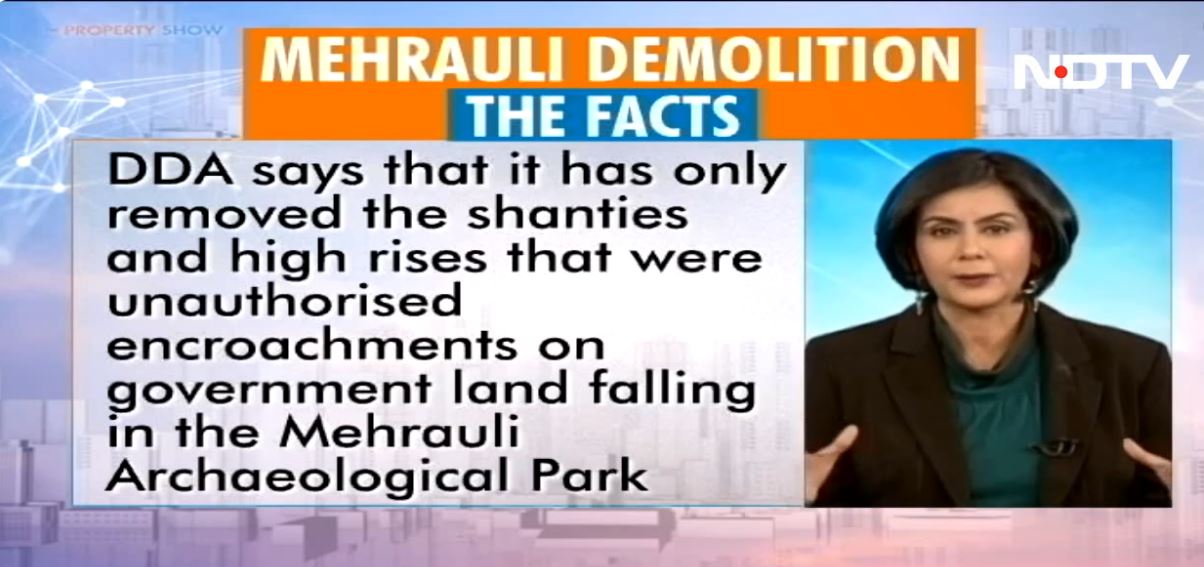
In February 2023, over dozens of homes were demolished near the Mehrauli Archaeological Park.
Residents said:
“We have electricity bills, water connections, tax receipts!”
Authorities responded:
“Those don’t prove legality—building permission does.”
Many families who lived there for decades learned too late that their construction existed on disputed land boundaries classified as Archaeological Zone. This case shocked India—because it showed how legal-looking documents can still be meaningless.
How to Protect Yourself From Legal & Financial Disaster
Buying property in India isn’t just a transaction — it’s a life decision. It’s emotional, aspirational, and for many, the culmination of decades of savings. But mistakes here can turn dreams into nightmares. Before signing anything, here’s what you must do — slowly, methodically, and skeptically.
1. Verify Land Title and True Ownership
This is the heart of property legality. Ask for documents — don’t shy away, don’t feel embarrassed, don’t “trust the seller.” Trust paperwork.
You must verify:
- Mother Deed — traces original ownership history
- Sale Deed — confirms legal transfer of ownership
- Land conversion certificate — for converting agricultural land to residential
- Tax receipts — ensures landowner is officially recognized
- Mutation records — shows name transfer in government land records
Imagine ownership like a chain — every link must be intact. If there’s even one missing link, even one unresolved past transfer, even one undocumented inheritance — stop right there.
Many buyers ignore this step because paperwork feels tedious. But ignoring it is like marrying someone without knowing their real identity.
2. Demand Municipal & RERA Approvals (Never Rely on Verbal Promises)
Builders love to say things like:
- “Approval is in process.”
- “Everyone is buying — don’t miss out.”
- “Sir, it’s just a formality.”
- “Trust me, everything is clear.”
Never trust words. Trust documents.
Ask for certified copies of:
- Approved building plans
- Commencement certificate
- Completion certificate (CC)
- Occupancy certificate (OC)
If a project falls under RERA, always check if it is:
- RERA registered
- legal in terms of built-up ratio
- transparent in declared timelines and specifications
RERA was designed specifically to protect buyers from fraudulent and predatory construction practices. Make it your shield.
Occupancy vs Completion Certificate : The Ultimate Survival Guide for Indian Homebuyers
3. Hire a Legal Expert — Not Your Uncle or Sister, Not “A Friend Who Knows Stuff.”
This is where many Indians hold back — we hesitate to consult a property lawyer because we want to avoid paying legal fees. But realistically, a good real estate lawyer charging ₹5,000–₹50,000 can safeguard an investment of ₹50 lakh to ₹5 crore — and protect your peace of mind for as long as you own the property. Think of it not as an expense, but as insurance against future legal and financial nightmares.
A skilled lawyer can spot:
- forged ownership papers
- bogus zoning status
- fake approvals
- tenancy disputes
- pending litigation
- land encumbrances
- title defects
- inheritance claims
Losing ₹1 crore due to property seizure is catastrophic. Paying ₹25,000 for legal safety is not.
4. Check Utility Approvals & Land Zone Classification
This aspect is often overlooked because most people assume that roads, drainage lines, and electrical networks automatically come with a property — as if they inherently “exist.” But in India, that’s not always true — sometimes even the access road to a building isn’t technically legal or officially registered. In such cases, it’s always wiser to take those extra steps of due diligence, ensuring every aspect of the infrastructure is verified and compliant.
Verify:
- Electricity board permissions
- Municipal water clearance
- Sewage system approval
- Stormwater drainage plan
- Land zoning category
Safety Measures for Buyers
Prefer Developers with a Proven Track Record
Look at:
- Completed projects (not just glossy brochures)
- Years in business
- Customer reviews
- Legal history
- Pending lawsuits
A developer’s past is a preview of your future.
Beware of Bargain Deals — If It’s Too Cheap, Something’s Wrong
If a flat is 30–40% cheaper than similar properties in the area — forget excitement and ask:
“Why?”
Possible reasons:
- no approvals
- illegal extra floors
- disputed land
- pending litigation
- future demolition risk
- hidden caveats
- lack of occupancy certificate
Cheap property often carries expensive consequences.
Keep Multiple Copies of All Documents (Digital + Physical)
Scan and store everything:
- agreements
- receipts
- approvals
- legal notices
- records of conversation
Keep:
- One set at home
- One set with a trusted person
- One set in cloud storage
Because in India, many disputes depend on “who can produce the document first.”
Making Real Estate Safer, Cleaner, and More Transparent
Stricter Urban Development Policies
India desperately needs:
- clearly defined building norms
- uniform urban regulation
- transparent land registration
- uncompromising penalty systems
Illegal construction thrives not because people want to cheat but because rules are confusing and enforcement is inconsistent.
National Digital Property Verification
In India, the national digital property verification initiative is primarily driven by the Digital India Land Records Modernization Programme (DILRMP). It aims to create an Integrated Land Information Management System (ILIMS) to provide real-time, tamper-proof, and transparent land records.
Punishing Corrupt Officials, Not Just Builders & Buyers
When an illegal building exists, someone in the system allowed it, ignored it, or profited from it.
Enforcement must also target:
- Bribed municipal officers
- Negligent zoning supervisors
- Inspector–builder collusion networks
- Politically protected developers
If only the buyer suffers — justice is not served. This highlights the need for consistent, transparent, and equitable enforcement of regulations, ensuring that compliance standards apply uniformly—across all scales of construction and all categories of stakeholders.
Ethical Lens — The Human Complexity Behind Illegality
This issue is not black-and-white.
We must acknowledge:
- India’s urban population is exploding
- affordable housing is scarce
- slum resettlement is inadequate
- bureaucratic processes are slow and sometimes lacks transparency
- legal housing is often financially inaccessible
Different groups often face different realities when it comes to housing and development. Whether it’s individuals building out of necessity or companies executing large projects, the goal should be to create a regulatory environment that is fair, predictable, and equally applicable to everyone.
Conclusion — Final Thoughts
Illegal construction is not just a legal issue—it’s a human one. The bulldozers don’t just break walls—they break lives, memories, communities. For property buyers, the lesson is simple yet powerful: don’t rush into property purchases blindly. Verify everything. Consult professionals. Protect your future.
Cities must grow—but legally, sustainably, and ethically. And until the system becomes fully transparent, the burden of caution rests on you, the buyer.
Need Help?
Need help evaluating a property or planning your next move in the market?
Reach out to 99 REALTY – your trusted real estate partner for smarter choices.
Subscribe to get updates on our latest posts and market trends.


Join The Discussion