

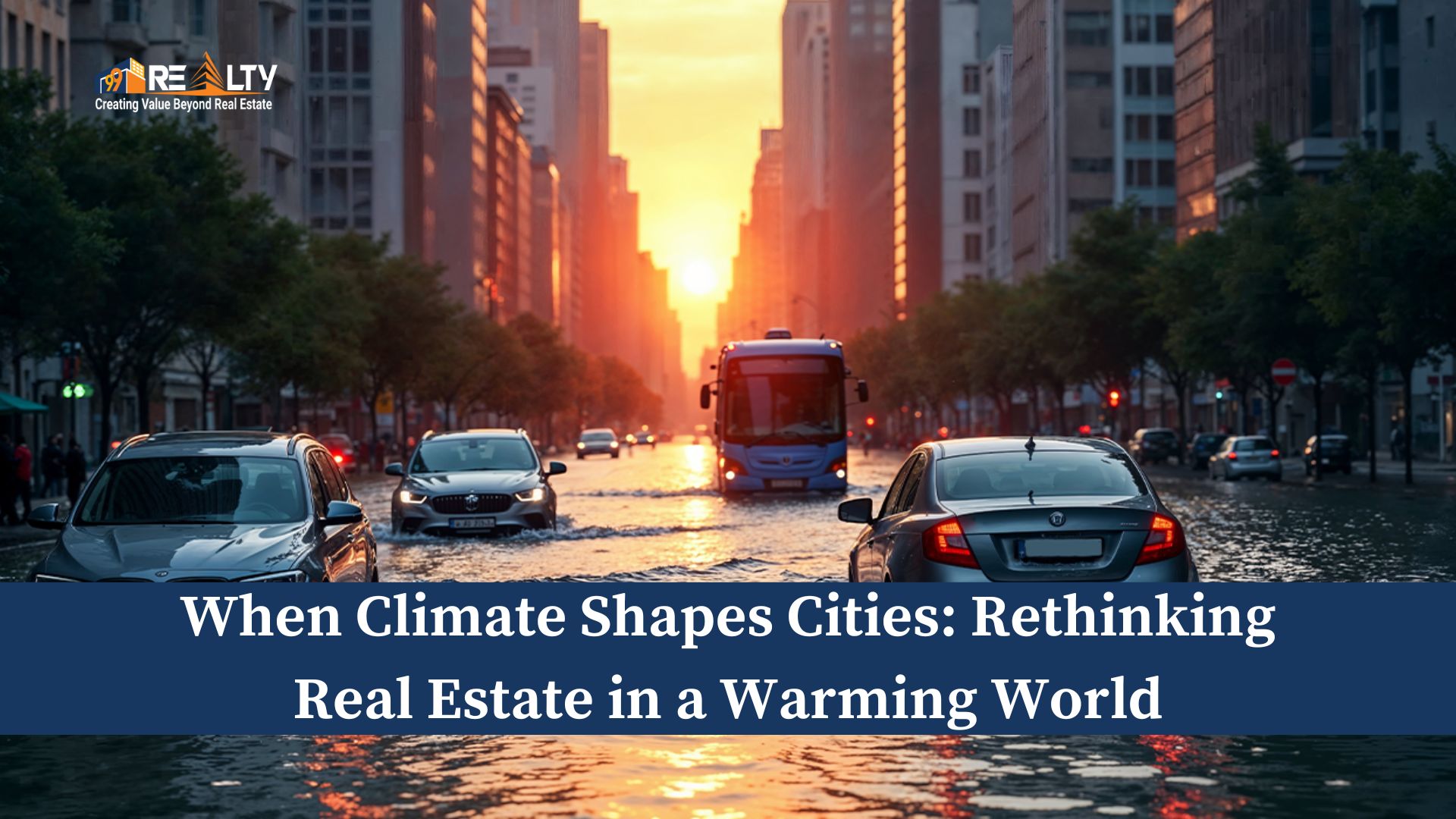
Imagine a monsoon evening in Mumbai: the rain is relentless, water seeps up the street, and the once-secure dream home is swept away. Move to Delhi in May, when the heat is so fierce that even covered balconies offer no respite. These are no longer extraordinary extremes; they are now part of everyday city life.
This is where the debate over climate change and real estate really begins. Previously driven by the attractiveness of great sites and luxurious finishes, today’s market is being molded by a new set of priorities: resilience, sustainability, and human well-being. Developers are beginning to create houses and neighborhoods that respond to the climate, with the environment serving as the most significant architect in the tale, rather than a mere backdrop.
Climate Change is Redrawing the Map of Property Value
Investors and purchasers are asking new questions:
- Will this location flood?
- Is the green cover adequate to reduce heat?
It’s no longer simply about comfort; it’s about the cost. Rising insurance costs, and in certain high-risk locations, outright refusal of coverage, are changing the way banks, lenders, and families look at real estate. Climate hazards are affecting more than just property values; they are also altering mortgages, household wealth, and the concept of long-term security.
Exploring the Real Estate Landscape of Durgapur: New Projects and Emerging Locations
Homes That Breathe with the Climate
Homes can no longer be sealed boxes. They must breathe with their environment. Architects across India are reintroducing courtyard design and courtyard gardens – designs that control temperature naturally, increase ventilation, and reduce reliance on artificial cooling. Courtyards play a significant role in improving sunshine penetration, saving energy costs, and promoting thermal comfort, especially in hot areas. Moreover, courtyards boost wellness by serving as a shared social anchor while also giving inhabitants periods of calm in densely populated urban environments.
Designing Cities that Cool Themselves
Climate change affects not only our homes, but also the wider neighborhoods that surround them. Urban vegetation is becoming a type of climate technology. London-based research demonstrates how water features, vertical green walls, and layered vegetation may significantly cool urban gardens and streets, even during peak summer months.
In India, pilots using “sponge city” ideas – including pavements that soak up rainfall, gardens that offer natural drainage, and wetlands integrated in planning – are assisting towns such as Gurugram in better managing flooding. This form of green infrastructure saves energy usage by minimizing the urban heat island effect.
Affordable Homes Now Possible With 3D Printing in India?
Market Value in the Age of Climate Risk
Sustainability was once considered “nice to have.” It now has a direct influence on pricing. Green-certified properties have more rents, fewer vacancies, and a higher resale value. Did you know that Indian cities will need $2.4 trillion in infrastructure investments by 2050 to handle climate-related risks and sustain growth? For buyers and investors, this means that residences and buildings that are best suited to deal with climate change will not only be safer, but will also be worth more in the long term.
Quick Insight:
- Green-certified buildings command 7–10% higher rents globally
- Climate risks are increasing insurance premiums in coastal cities
- India needs $2.4 trillion in climate-resilient infrastructure by 2050
Well-being as the Core of Climate-Responsive Real Estate
Climate change also causes stress, along with heat and flooding. A house nowadays must feel safe and better at the same time. That is why real estate climate resilience is becoming more human-centric. Natural ventilation, ergonomic design, filtered light, and low-toxicity materials create environments in which people thrive.
They contribute to this shift by prioritizing designs that blend sustainability with well-being, proving that climate responsibility and comfort can truly coexist.
Living with the Climate, Not Against It
The real estate climate risk is no longer a theoretical concept; it is experienced daily in flooded basements, overheated apartments, and increasing energy expenses. However, it is also obvious in the quiet strength of climate-conscious architecture, such as cool courtyards, breathing green streets, and residences that value well-being.
As India’s urbanization grows, the fate of real estate will be determined by how closely it follows the weather. And communities that capitalize on this change, through green planning, climate-resilient infrastructure, and people-centered design, will not just survive, but thrive.
The true home of the future evolves with us, shifting, adapting, and protecting as the world around it changes.
Need Help?
Need help evaluating a property or planning your next move in the market?
Reach out to 99 REALTY – your trusted real estate partner for smarter choices.
Subscribe to get updates on our latest posts and market trends.


Join The Discussion