

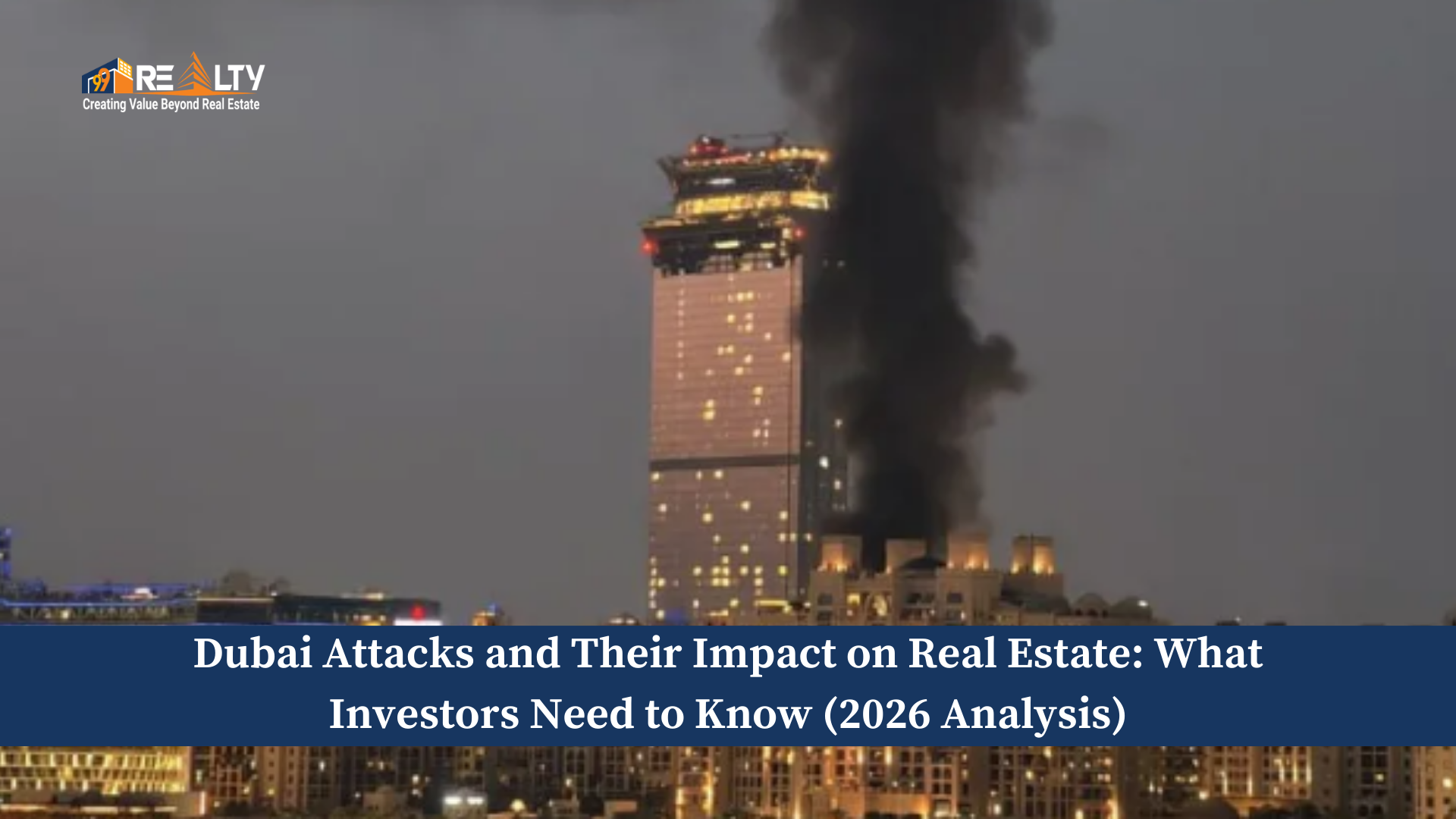
Dubai’s real estate market has long been considered one of the safest and most attractive property destinations in the world. Stable governance, investor-friendly regulations, tax advantages, and global connectivity have made the city a magnet for international capital. However, recent geopolitical tensions and missile attacks linked to the escalating Iran–Israel conflict have raised questions about whether Dubai’s reputation as a safe-haven real estate market could be affected.
This article examines the recent attacks, investor sentiment, and the potential short- and long-term impact on Dubai’s property market, using available data and credible reports.
How to Use Home Loans for Property Investment
Dubai’s Real Estate Boom Before the Attacks
Before the geopolitical tensions escalated in 2026, Dubai was experiencing one of the strongest real estate cycles in its history.
Between 2022 and early 2025, residential property prices in Dubai rose by roughly 60 percent, driven largely by foreign investment, tax incentives, and post-pandemic migration of wealthy individuals.
The city also recorded record transaction volumes. According to government figures, real estate deals reached around AED 761 billion ($207 billion) in a single year, reflecting the scale of investor participation in the market.
Several structural factors supported this boom:
- Residency visas linked to property investment
- A surge in global millionaires relocating to the UAE
- Strong tourism recovery
- Dubai’s positioning as a global business hub
By 2025, Dubai had become one of the world’s fastest-growing property markets.
The Recent Attacks: What Happened?
In early 2026, the Middle East conflict intensified, leading to missile and drone strikes targeting infrastructure in the UAE, including areas around Dubai and Abu Dhabi.
Reports indicate that attacks affected airports, ports, and residential zones, while fires were reported at luxury landmarks and hotel properties.
Regional markets reacted quickly:
- Dubai’s stock market fell about 4.7 percent after reopening following a temporary halt in trading.
- Major developers and real estate-linked companies experienced share price declines.
The attacks also disrupted travel and tourism. Airlines cancelled flights and vacation rental cancellations increased significantly, with forecasts suggesting 23-38 million fewer tourists across the region due to the conflict.
Because tourism and expatriate migration are closely linked to Dubai’s property demand, these developments immediately raised concerns for the real estate sector.
Ultimate Impact of Middle East Crisis On India’s Real Estate Market in 2026
Immediate Impact on Dubai Real Estate
1. Investor Sentiment Has Turned Cautious
Real estate brokers in Dubai report that buyers are adopting a wait-and-watch approach. Some investors have postponed property purchases until geopolitical clarity emerges.
In certain cases:
- Site visits by buyers have declined
- Some deals have been withdrawn
- Negotiations have become more aggressive
This shift is typical in real estate markets during geopolitical uncertainty.
2. Mid-Segment Housing May Face the Most Pressure
Industry experts suggest that mid-range residential properties could be most affected.
Buyers in the AED 1.5–4 million (approximately ₹3–8 crore) price range are more sensitive to economic uncertainty and may delay investments or renegotiate pricing.
Luxury segments, which attract ultra-high-net-worth buyers, are usually more resilient because those investors often buy with large equity and long-term intentions.
3. Dubai’s Safe-Haven Image Has Been Tested
For decades, Dubai’s most powerful investment proposition has been its stability in a volatile region. However, the recent attacks have challenged that perception.
Analysts note that the strikes have punctured the psychological image of Dubai as a completely insulated safe investment destination.
Even if the physical damage remains limited, investor perception can influence capital flows significantly.
Structural Risks for the Property Market
While the attacks themselves are significant, they coincide with existing structural challenges in Dubai’s property market.
Oversupply Concerns
Analysts had already warned about potential oversupply before the conflict. Around 210,000 new housing units are expected to be delivered in the coming years, which could put pressure on prices if demand slows.
Dependence on Foreign Capital
Dubai’s property market relies heavily on international buyers. In 2025, a large share of transactions involved overseas investors, including high-net-worth individuals relocating to the UAE.
If geopolitical risks cause capital to move elsewhere, transaction volumes could temporarily decline.
Long-Term Outlook: Will Dubai Real Estate Collapse?
Despite short-term volatility, most analysts believe a major collapse is unlikely.
Several factors support the market’s resilience:
1. Strong Economic Fundamentals
Dubai’s diversified economy includes tourism, logistics, finance, technology, and global trade. The city has spent decades building infrastructure and global connectivity.
2. Large Equity Ownership
Unlike the pre-2008 market, many current property owners hold high equity positions rather than heavy mortgage leverage, reducing forced selling during temporary downturns.
3. Continued Global Demand
Dubai continues to attract entrepreneurs, expatriates, and wealthy migrants seeking tax efficiency and lifestyle advantages.
4. Government Intervention Capacity
The UAE government has historically acted quickly to stabilize markets through policy adjustments, investor visas, and regulatory reforms.
Lessons from Past Crisis
Real estate markets around the world often react temporarily to geopolitical events.
For example:
- After the 2008 Mumbai attacks, real estate sales slowed briefly but recovered within months once confidence returned.
- Tourism-driven property markets globally tend to experience short-term demand shocks but stabilize once security conditions improve.
Dubai’s property market has shown similar resilience after previous economic and geopolitical disruptions.
What Should Investors Do Now?
For investors evaluating Dubai real estate during geopolitical uncertainty, a few strategic considerations are important:
Focus on long-term fundamentals
Short-term volatility often creates buying opportunities rather than permanent declines.
Prioritise prime locations
Premium areas such as Downtown Dubai, Palm Jumeirah, and Dubai Marina historically recover faster.
Avoid speculative investments
Projects driven purely by short-term hype may face stronger corrections during uncertainty.
Monitor geopolitical developments
Investor sentiment in global markets is highly sensitive to geopolitical risk.
Need Help?
Need help evaluating a property or planning your next move in the market?
Reach out to 99 REALTY – your trusted real estate partner for smarter choices.
Subscribe to get updates on our latest posts and market trends.



Join The Discussion