

When it comes to buying or designing a home, one of the most critical documents you’ll encounter is the floor plan. It serves as a roadmap of your potential living space, visually illustrating how each room is laid out, how they connect and how the entire home functions. However, for many first-time homebuyers, these drawings can be daunting. The array of measurements, symbols and notations can leave you feeling confused and overwhelmed.
Leasehold vs Freehold in India: What Makes One Better for Your Dream Home?
Misinterpreting a floor plan can have significant consequences. It may lead to misunderstandings regarding the size of the rooms, the placement of your furniture or whether the layout actually suits your lifestyle needs. These are essential factors that contribute to your overall comfort and happiness in your new home.
Whether you’re a first-time buyer or simply evaluating a new layout, by the end of this guide, you’ll know how to read floor plan measurements with confidence.
What Is a Floor Plan?
A floor plan is a scaled drawing that shows the layout of a home from a top-down perspective. It outlines the walls, rooms, doors, windows, placement of utilities and various other fixtures. Floor plans are used in property listings, architectural drawings, interior design plans, renovation proposals and even in brochures for new residential projects to give the buyers a sense of the space.
Beyond offering visual clarity, floor plans also show measurements. Understanding these measurements is essential because they reveal the usability and functionality of a space. A room may appear large at first glance, but without knowing its exact dimensions or the scale of the drawing, it’s difficult to assess whether it will meet your needs. That’s why knowing how to read floor plan measurements helps buyers make informed decisions long before making a site visit.
Understanding Common Floor Plan Symbols
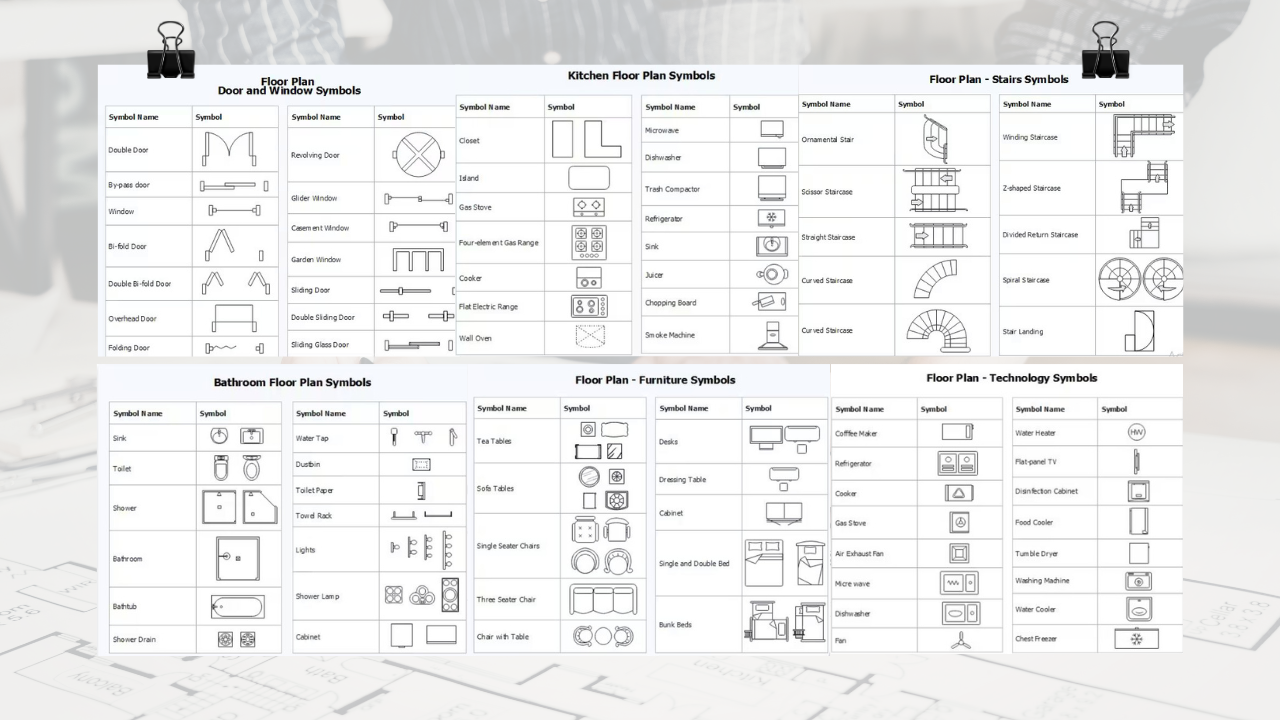
Floor plans use simple symbols to represent elements of a home. Solid lines typically indicate walls, while thin lines or curved arcs show door swings. Windows are often shown as breaks in the wall with thinner lines running parallel to it. Stairs appear as a series of rectangles, and built-in storage such as wardrobes or cabinets is represented by marked boxes or rectangles inside the room.
Symbols for appliances, such as sinks, stoves, washing machines, or refrigerators, help visualize daily usability. Furniture outlines are often included to give a clearer picture of how the room functions when furnished. Understanding these symbols is vital because they affect circulation space, the placement of utilities, and how easily you can customize your home’s interior layout. Even with visual variations across developers, most symbols remain universally recognizable once you learn what to look for.
Here is a quick mini-legend summarizing the most common floor plan symbols you are likely to encounter:
Decoding the Scale of a Floor Plan
Scale determines how the measurements in the drawing translate to the space in the real world. A typical floor plan may use scales such as 1:50 or 1:100. A scale of 1:100 means that 1 centimetre on the drawing equals 1 metre in real life. This helps represent large spaces on a small sheet without distorting proportions.
Understanding scale matters as it allows you to calculate the actual room sizes, figure out the furniture spacing and circulation paths. For example, if a bedroom measures 4 centimetres by 3 centimetres on a 1:100 scale plan, the real room is 4 metres by 3 metres.
Without understanding scale, it becomes difficult to estimate how spacious the room truly is or whether it will feel cramped once furnished.
How to Read Floor Plan Measurements
Measurements on a floor plan usually appear in the format of length × width. These numbers tell you how much usable area the room offers. Learning how to read floor plan measurements begins with identifying the units being used (most drawings use feet or metres). Some plans also include inches, especially when detailing built-in fixtures or smaller architectural components.
A common detail many buyers overlook is the ceiling height, which determines how open and spacious a room feels. Higher ceilings provide better ventilation and natural light, while lower ceilings can make a room feel compact and cosy. Floor plans also indicate the overall square footage or square metre count of the entire property. This helps compare layouts within the same price range or across different projects to find the one that best fits your vision.
For instance, if a living room is marked as 12′ × 14′, this means the room is twelve feet wide and fourteen feet long. Once you know how to read floor plan measurements, it becomes easier to understand how furniture will fit and whether the space aligns with your lifestyle.
How to Read Room Dimensions on a Floor Plan
Understanding how to read room dimensions starts with locating the measurement lines around the perimeter of each room. These lines typically run parallel to the walls and indicate the internal distance from one side to another. Bedrooms often show dimensions along their longest and shortest walls. Kitchens display wall-to-wall distances to help assess countertop and appliance placement, while living rooms display overall width and depth for furniture planning.
Once you have interpreted these dimensions accurately, you can determine whether your existing furniture will fit or if new pieces are required. For example, a standard queen bed requires around 5 feet by 6.5 feet. If a bedroom measures 10′ × 11′, it can easily accommodate the bed, along with walking space and good wardrobe placement. By learning how to read room dimensions, you avoid overcrowding rooms or assuming the home is larger than it actually is.
Some red flags buyers should notice include narrow corners, awkward nooks, oversized passages and rooms that appear large on paper but have structural columns inside, thereby reducing the usable space.
How to Read Dimensions on a Floor Plan Like a Pro
To understand how to read dimensions on a floor plan effectively, it’s important to differentiate between usable and unusable areas. Circulation space, that is, the walking paths between furniture and throughout rooms, plays a key role in creating comfortable living environments. A room may seem large, but if corners are tight or the layout restricts movement, it can compromise functionality.
Floor plans also show the placement of electrical points, plumbing lines and structural elements like beams or columns. These details determine where you can place certain appliances, install lighting fixtures, or position your furniture. Walls marked with plumbing symbols indicate where washbasins, toilets, or kitchen sinks will be located, and electrical symbols highlight key switchboards and outlets.
Once you know how to read dimensions on a floor plan, these small markers become invaluable clues about the home’s livability.
Costly Floor Plan Mistakes Indian Homebuyers Commonly Make
Many Indian homebuyers misinterpret floor plans even after checking measurements. One common mistake is assuming the listed room size reflects the actual usable area. Structural columns, ducts, wall thickness and service shafts often reduce real space, especially in bedrooms and living rooms.
Door swing directions are another overlooked detail. Poorly placed doors can block wardrobes, restrict movement and limit furniture placement in compact rooms.
Buyers also tend to ignore passage widths. Narrow corridors may look acceptable on paper but feel congested in daily use and reduce natural light flow. Similarly, beams and columns shown subtly on plans can limit renovation and interior design flexibility later.
Bathrooms and kitchens require special attention. Inadequate ventilation, poorly placed shafts or awkward plumbing layouts can cause long-term comfort and maintenance issues. Lastly, focusing only on size and not orientation can result in poorly lit or overheated rooms.
Avoiding these common mistakes ensures the floor plan works not just visually, but practically—every single day.
Understanding Layout Flow and Home Functionality
Beyond measurements, the layout flow determines how comfortably you’ll move through the home. A functional layout places the living room near the entrance, bedrooms in quieter corners, and the kitchen in a well-ventilated area.
Privacy is another important consideration. A well-designed floor plan ensures that bedrooms are not positioned directly next to living or entertainment areas. Ventilation and sunlight direction matter as well. North and east-facing homes often get balanced light throughout the day. Making them a top choice for many. Open layouts may feel airy and modern, while closed layouts offer better privacy and dedicated zones.
Common Floor Plan Mistakes to Avoid
Many buyers misread plans by ignoring the scale or assuming they understand the dimensions without calculating real-world sizes. Wall thickness is another commonly overlooked element, as thicker walls reduce the usable floor space. Some buyers also forget to account for balconies, wardrobes and storage units, which take up more space than expected.
The placement of bathrooms and kitchens is also crucial. Poor positioning may lead to ventilation issues, plumbing challenges, or awkward movement flow within the home. Evaluating these factors ahead of time prevents surprises after possession.
Simple Floor Plan Reading Checklist
This quick list can help you stay focused when analysing any property plan:
- Check the scale of the drawing
- Confirm measurement units
- Review room dimensions
- Identify door and window placement
- Check furniture fitments
- Understand the circulation space
- Note electrical and plumbing points
- Review the sunlight and ventilation flow
Conclusion
Learning to read a floor plan becomes significantly easier with a structured approach. Once you understand the symbols, scale, and measurement techniques, the layout begins to make sense visually and functionally. Taking time to analyze how rooms connect, where utilities are placed, and how spacious each area truly feels helps buyers make confident decisions. Understanding how to read floor plan measurements is ultimately a practical skill that empowers you to compare multiple layouts, evaluate value for money, and choose a home that aligns with your lifestyle. Buyers exploring thoughtfully designed communities, such as those developed by 99Realty, often find that clear, well-planned floor layouts make the entire home selection process more intuitive, transparent, and future-ready.
Need Help?
Need help evaluating a property or planning your next move in the market?
Reach out to 99 REALTY – your trusted real estate partner for smarter choices.
Subscribe to get updates on our latest posts and market trends.



Join The Discussion