

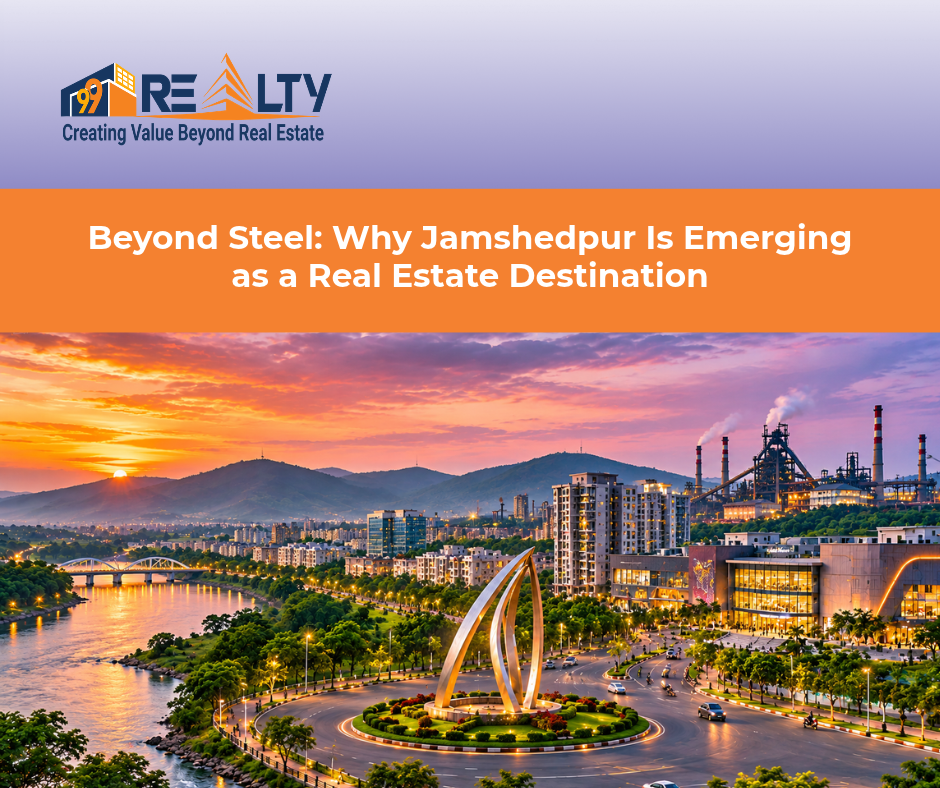
Jamshedpur has long been synonymous with steel, manufacturing and the legacy of Tata Steel. But beyond its industrial identity, the city is steadily evolving into a more diversified urban centre, supported by employment, infrastructure development and demand for quality housing.
For property investors, the opportunity lies not simply in the city’s history, but in how its economic foundations could shape its next phase of growth.
Here are five reasons why Jamshedpur deserves a closer look.
1. Industrial investment continues to strengthen the economic foundation
Jamshedpur’s real estate story is closely tied to its industrial ecosystem. Tata Steel’s manufacturing operations, along with the network of ancillary industries and suppliers across the region, create a substantial base of economic activity.
In 2026, Tata Steel announced plans to invest approximately ₹10,000 crore in Jharkhand by 2028, including projects involving low-carbon steelmaking, tinplate expansion and a new combi mill. The company expects these initiatives to generate around 2,000 direct and indirect jobs.
Such investments can have implications beyond factory floors. Industrial expansion may support demand for rental housing, apartments, commercial premises and services as workers, professionals and associated businesses seek accommodation closer to employment centres.
How to Use Home Loans for Property Investment
2. Employment and a stable end-user housing market
Unlike property markets driven primarily by speculative demand, Jamshedpur benefits from an established employment base. Manufacturing, engineering, healthcare, education, retail and services contribute to the city’s residential demand.
The presence of established employers and institutions supports a broad range of housing needs—from affordable apartments for young professionals to larger homes for families and senior executives.
For investors, this creates opportunities to assess properties based on practical rental demand, proximity to workplaces and access to everyday amenities. Locations near established employment hubs may be particularly relevant for buyers seeking long-term rental income.
3. Infrastructure development is reshaping connectivity
Connectivity remains a crucial factor in real estate value, and Jamshedpur is seeing proposals and investments aimed at improving urban mobility.
In 2025, authorities approved a package of urban development proposals that included three flyovers, two foot overbridges, road improvements and parking facilities. Proposed flyover locations include the Adityapur bridge–Shastri Nagar–Toll Bridge corridor and key city routes.
A modern interstate bus terminal near Mango Dimna Chowk has also received in-principle approval, with an estimated project cost of ₹145.24 crore.
If implemented effectively, these projects could improve access between residential neighbourhoods, commercial centres and surrounding industrial areas. Investors should, however, distinguish between announced, approved and operational infrastructure when evaluating a property’s location.
4. Diverse neighbourhoods offer different investment opportunities
Jamshedpur is not a uniform property market. Its neighbourhoods cater to different budgets, lifestyles and investment objectives.
Established residential areas such as Bistupur, Sakchi, Sonari and Kadma offer access to existing commercial activity and social infrastructure. Meanwhile, locations around Mango, Adityapur and the NH-33 growth corridor may appeal to buyers looking for emerging residential options and comparatively accessible entry points.
This diversity allows investors to consider different strategies, including:
- Rental-focused apartments near employment and commercial hubs
- Family homes in established residential neighbourhoods
- Long-term investments in developing connectivity corridors
The key is to evaluate each micro-market independently rather than assuming that citywide growth will translate into equal appreciation everywhere.
5. A growing city with long-term urban potential
Jamshedpur’s appeal extends beyond its industrial base. Its established educational institutions, healthcare facilities, retail centres and planned urban amenities make it an important destination for families and professionals across the region.
The city’s development trajectory, combined with ongoing industrial investment, creates a foundation for continued housing demand. As infrastructure and urban services evolve, well-located properties with clear legal titles, reliable connectivity and practical amenities may remain attractive to end users.
For investors, the long-term case rests on identifying properties that meet genuine housing needs—not simply buying in anticipation of rapid price increases.
The 99Realty perspective
Jamshedpur offers a compelling combination of industrial resilience, established employment, evolving infrastructure and diverse residential options. These fundamentals make it worth considering for investors seeking exposure to Jharkhand’s urban property market.
However, every investment requires due diligence. Buyers should verify title documents, applicable land regulations, project approvals and RERA registration where applicable. Rental yields, maintenance costs, resale liquidity and the status of nearby infrastructure should also inform the decision.
The bottom line: Jamshedpur’s investment potential is rooted in its economic strength and its capacity to evolve. For buyers who take a location-specific, long-term approach, the steel city offers a market worth exploring.
Need Help?
Need help evaluating a property or planning your next move in the market?
Reach out to 99 REALTY – your trusted real estate partner for smarter choices.
Subscribe to get updates on our latest posts and market trends.

Join The Discussion