

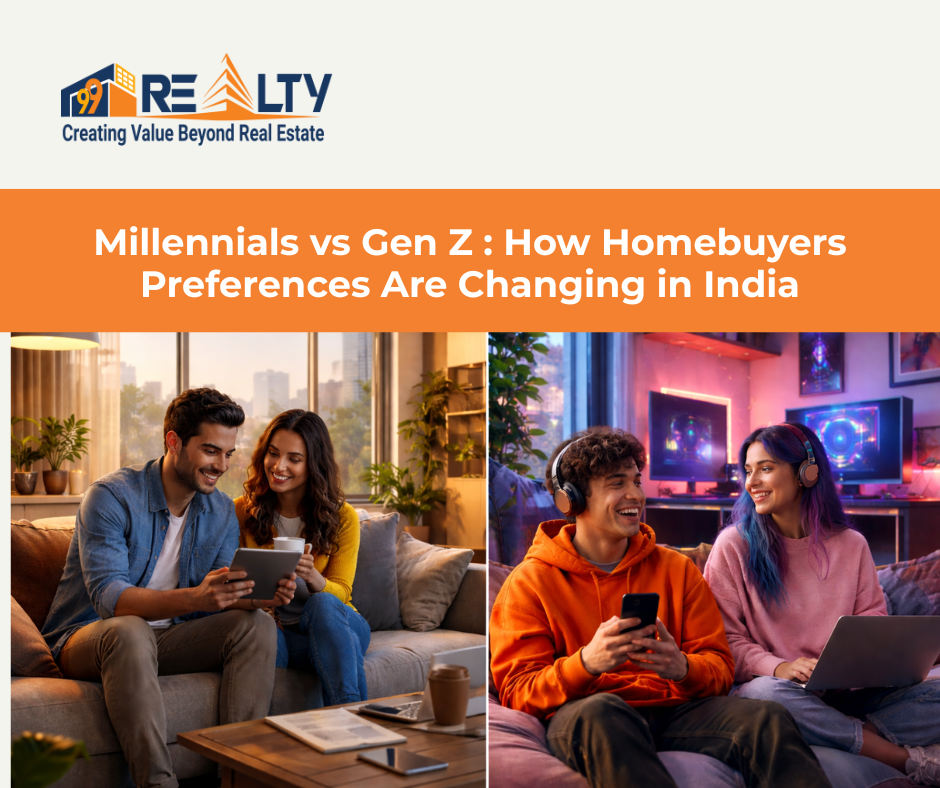
Step into any newly built apartment today and you’ll sense it instantly—something has changed. The walls feel lighter, the spaces more intentional, the idea of “forever” a little less rigid. In India, housing is no longer just about owning property; it’s about how that space fits into life itself.
The Future of Housing: What Millennials and Gen Z Really Want From a Home isn’t driven by tradition anymore. It’s shaped by lived experiences—rising property prices, evolving careers, remote work, climate concerns, and a growing desire for balance. Millennials are questioning old assumptions, while Gen Z is discarding traditional way of living altogether.
This isn’t a loud revolution. It’s a quiet redesign of priorities. And it’s transforming Indian real estate from the inside out.
SOHO Explained: Why Small Office Home Office (SOHO) is the Next Big Trend in India
A Generational Shift You Can’t Ignore
For decades, housing in India followed a familiar, almost unquestioned script: buy early, buy big, and settle down for life. A home was less a choice and more a milestone—one that defined adulthood, success, and social standing. But that script has begun to feel outdated, even restrictive, in today’s rapidly changing world.
Millennials and Gen Z grew up in two very different versions of India—shaped by shifting economies, evolving social norms, and an explosion of digital access. Naturally, their ideas of what a home should be have evolved too. Where one generation learned caution from economic uncertainty, the other learned adaptability from constant change.
Millennials still carry echoes of the traditional dream, but they approach it with a pause, a plan, and a fair bit of pragmatism. Gen Z, on the other hand, isn’t revising the old rulebook—they’re starting from a blank page altogether.
Millennials: Redefining Stability Without Letting It Go
Millennials were raised to believe that owning a home was the ultimate marker of success. Yet, reality taught them otherwise. Job uncertainty, delayed marriages, rising EMIs, and sky-high real estate prices forced a pause—and reflection.
Today’s Millennial homebuyer is practical. They don’t chase size blindly. They ask sharper questions:
Does this home improve my lifestyle? Can I afford it without financial stress? Will it grow in value—or at least not become a burden?
They’re okay with compact homes, peripheral locations, and delayed purchases, as long as the choice aligns with long-term security. For them, a home is still an anchor—but a flexible one.
Benefits of the RERA Act for Homebuyers
Gen Z: Freedom First, Address Later
Gen Z approaches housing with a completely different mindset. Having grown up in a hyper-connected world, they don’t associate success with permanence. Their careers are fluid, their aspirations global, and their lives mobile.
To Gen Z, a home is not a final destination. It’s a temporary base—a place that supports work, creativity, and social life without tying them down. Renting isn’t a compromise; it’s a strategy. Co-living isn’t crowded; it’s communal.
Ownership may come later—or not at all. And they’re perfectly fine with that.
Location: From “Prime Address” to “Right Fit”
The definition of a good location has changed dramatically.
Millennials still prefer well-connected neighborhoods, but they’re no longer obsessed with city centers. Improved infrastructure and better planning have made suburban living far more attractive. Shorter commutes matter, but so do green spaces and quieter surroundings.
Gen Z looks beyond maps entirely. With remote work normalized, they’re choosing places based on lifestyle rather than proximity. A smaller city with lower rent, better air, and strong internet often beats a crowded metro.
The future home isn’t about where it stands—it’s about how it supports daily life.
India’s Real Estate Industry: The Next Employment Generation Hub
Smaller Homes, Smarter Living
Big homes once symbolized prosperity. Today, they often feel like unnecessary baggage.
Millennials prefer efficient layouts—homes that are easy to maintain and thoughtfully designed. Every square foot must earn its place. Utility matters more than grandeur.
Gen Z takes minimalism further. Studio apartments, convertible furniture, multi-use spaces—these aren’t trends but practical responses to modern living. Why pay for rooms that serve no purpose? Why clean space you don’t use?
The homes of the future won’t impress with size. They’ll impress with intelligence.
Amenities That Reflect Real Life
Amenities are no longer about luxury—they’re about relevance.
Millennials value features that enhance family life and well-being. Fitness areas, security systems, green zones, and community spaces still matter because they offer comfort and continuity.
Gen Z wants amenities that blur boundaries. Co-working lounges, social hubs, creative corners, shared experiences—spaces where living, working, and networking coexist naturally.
A modern home isn’t just private space. It’s part of a larger ecosystem.
Technology as a Way of Life
Technology has moved from novelty to necessity.
Millennials appreciate smart features that simplify life—digital security, automated lighting, app-based maintenance. Convenience and safety are the key drivers.
For Gen Z, tech integration is assumed. Homes are expected to sync with devices, routines, and digital habits seamlessly. A house that isn’t smart feels outdated before move-in day.
In the future, homes won’t just shelter people—they’ll respond to them.
Sustainability: From Feature to Expectation
Environmental awareness is no longer optional—it’s shaping buying decisions.
Millennials see sustainability as a long-term advantage. Energy efficiency, water conservation, and green design translate into lower costs and healthier living.
Gen Z approaches sustainability emotionally and ethically. They care deeply about carbon footprints, construction practices, and long-term environmental impact. For them, a home that harms the planet simply doesn’t align with their values.
The future of housing is undeniably green—or it risks becoming irrelevant.
Ownership Is No Longer the Only Goal
Perhaps the biggest shift lies here.
Millennials still aspire to own, but they’re patient. They plan carefully, delay when needed, and prioritize financial health over social pressure. Ownership remains meaningful—but not at any cost.
Gen Z doesn’t view ownership as a milestone that defines adulthood. They value flexibility over fixed assets. Renting, co-living, or short-term arrangements allow them to adapt quickly to new opportunities.
Housing, for them, is a service—not a symbol.
How the Indian Housing Market Is Adapting
Developers and planners are finally paying attention.
We’re seeing:
- Compact, efficient housing designs
- Rental-first and co-living projects
- Mixed-use developments that reduce travel
- Tech-enabled property management
The shift isn’t instant, but it’s inevitable. The market is learning that tomorrow’s buyers don’t want yesterday’s homes.
The Bigger Picture: What the Future Really Looks Like
The Future of Housing: What Millennials and Gen Z Really Want From a Home isn’t about choosing between tradition and change. It’s about evolution.
Homes are becoming:
- More flexible
- More digital
- More sustainable
- More human-centric
The idea of success is no longer tied to owning the biggest house on the block. It’s tied to living well, staying adaptable, and feeling at home—wherever that may be.
Conclusion
Housing in India is no longer about ticking boxes—it’s about aligning with life. Millennials want stability without suffocation. Gen Z wants freedom without chaos. Together, they’re pushing the market toward smarter, leaner, and more meaningful homes.
The future isn’t about building more houses. It’s about building the right ones. And as these generations continue to shape demand, one thing is clear—the homes of tomorrow will reflect how we live, not how we used to.
FAQs
Are young Indians losing interest in buying homes?
Not losing interest—redefining priorities. Ownership is now a choice, not an obligation.
Will rental housing dominate the future?
Rental and co-living models will grow, especially among Gen Z and young professionals.
Do smaller homes mean lower quality of life?
Quite the opposite. Smart design often improves comfort, efficiency, and affordability.
Is sustainability actually influencing housing decisions?
Yes, especially among younger buyers who factor environmental impact into lifestyle choices.
Need Help?
Need help evaluating a property or planning your next move in the market?
Reach out to 99 REALTY – your trusted real estate partner for smarter choices.
Subscribe to get updates on our latest posts and market trends.


Join The Discussion